



OSS Society Puts Award Dinner on Radar
October 2024
An “Oh So Social” Conversation: Dr. Mike Vickers interviewed Dmitri Alperovitch about his book, World on the Brink: How America Can Beat China in the Race for the 21st Century
June 2024
An “Oh So Social” Conversation: Dr. Mike Vickers interviewed LTG Charles Cleveland, USA (Ret.) about his RAND report, “The American Way of Irregular War: An Analytical Memoir” (4/3/2024)
April 2024
An "Oh So Social Conversation”: Dr. Mike Vickers interviewed Gen. David Petraeus about his new book, “Conflict: The Evolution of Warfare from 1945 to Ukraine” (2/28/24)
March 2024
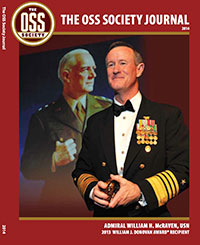
2023 William J. Donovan Award® Dinner Highlights
December 2023
An “Oh So Social” Conversation: Gen. Jim Mattis interviews Dr. Mike Vickers about his new book, By All Means Available: Memoirs of a Life in Intelligence, Special Operations, and Strategy
June 2023
OSS Memorial Dedication Ceremony
November 2022
OSS Memorial Dedication Booklet
October 2022
An “Oh So Social” Conversation Series: “Geopolitical Threats & The World” with Gen. David Petraeus & Dr. Mike Vickers
August 2022
“Oh So Social” Conversation Series: “The Digital Age: Killing Espionage & Saving Intelligence?” with Sue Gordon and Ellen McCarthy
June 2022
Watch the 2022 “Oh So Social” Author Spotlight: “Sisters of Night and Fog” with Erika Robuck and The Hon. Ellen McCarthy
May 2022
Watch the 2021 “Oh So Social” Conversation Series: The Wolves of Helmand with Gen. David Petraeus and Gus Biggio
June 2021
Watch the 2021 “Oh So Social” Conversation Series: The 10th Anniversary of the Osama bin Laden Raid
May 2021
Watch the 2021 “Oh So Social” Conversation Series: The Man Who Flew the Real “Inglourious Basterds” Behind Enemy Lines
April 2021
Watch the 2021 “Oh So Social” Conversation Series: “The Invisible Woman” with Ellen McCarthy and Erika Robuck
March 2021
Watch the 2021 “Oh So Social” Conversation Series: Leadership & Strategy with Sec. James Mattis and The Hon. Mike Vickers
February 2021
Tribute to MG Victor J. Hugo Jr., USA (Ret.)
November 2020
“Oh So Social” Conversation Series
October 2020
Maj. Gen. Victor Hugo Jr., Special Forces Icon
September 2020
Stars and Stripes: “France honors an American who fought behind enemy lines in WWII and went on to help others with PTSD"
February 2020
Operation OVERLORD: OSS and the Battle for France
November 2019
U.S. Coast Guard Receives OSS Congressional Gold Medal
September 2019
USASOC Receives OSS Congressional Gold Medal
August 2019
National Museum of Intelligence and Special Operations Receives American Architecture Award
August 2019
DIA receives OSS Congressional Gold Medal
August 2019
Small Wars Journal: “Lucien Conein: Legendary OSS, Special Forces and CIA Officer - Forgotten by the USASOC History Office?”
July 2019
The Washington Post: "Dan Pinck, memoirist of espionage behind the lines in wartime China, dies at 94"
Feb 2019
The Starr Foundation Makes a $10 Million Lead Gift to the National Museum of Intelligence and Special Operations
Dec 2018
Governor Cuomo Signs Legislation Naming a Portion of the State Highway System in Honor of General William 'Wild Bill' Donovan
Sep 2018
Special Operations Outlook
May 2018
"After a long wait, World War II spy service honored for daring acts that helped secure Allied victory" from the Washington Post
March 2018
"OSS, World War II espionage unit and CIA predecessor, awarded Congressional Gold Medal" from The Washington Times
March 2018
"National Intelligence Museum Planned in Loudoun’s Kincora Development" from LoudounNow
February 2018
"Navy SEALs remember Christian Lambertsen, humble beginnings of swimmer-commandos" from The Washington Times
November 2017
"Birthplace of the CIA and U.S. spycraft just made the National Register of Historic Places" from The Washington Post
January 2017
"Inside one of World War II’s most daring spy missions: The men who made OSS operations possible" from The Washington Post
January 2017
"Bill honoring World War II’s intelligence operatives finally passes in Congress" from The Washington Post
December 2016
"Bill that would honor World War II’s secret commandos can’t seem to pass in Congress" from the Washington Post
October 2016
"Spies left out in the cold: Congress must honor the OSS for helping win WWII” from The New York Daily News
October 2016
"A female spy finally gets the recognition she deserved 70 years ago” from The Washington Post
June 2016
"Frederick Mayer, German Jew who returned to Nazi Europe as U.S. spy, dies at 94” from The Washington Post
May 2016
"Frederick Mayer, Jew Who Spied on Nazis After Fleeing Germany, Dies at 94” from The New York Times
April 2016
"Stephanie Rader, undercover spy in postwar Europe, dies at 100” from The Washington Post
January 2016